Three journals, one afternoon, the same birch copse. The first holds a tidy grid of six boxes, each square a different lichen. The second opens across two pages into a single wide drawing of the treeline, notes crowding the margin. The third gives one careful study per page, dated, with a pressed leaf tucked beside it. None of these is the right way. But each layout has already decided what gets recorded, how long the sitting lasts, and whether the notebook comes along tomorrow. Here is how the three common formats behave in the field.
A page's shape settles three things at once: the smallest thing you can record, the largest scene you can fit, and how many separate observations can share a sheet. A grid of nine boxes says to look at small things repeatedly. A spread says the scene matters more than the entry. A single page asks for one complete idea and gives it room to breathe.
Choosing a format before you leave the house means most of the day's decisions are already made. That is not a limitation. Constraints keep a nature journal from becoming a vague intention that never quite starts.
Rule a page into four, six, or nine boxes with a light pencil line, then give each box a date, a subject, and a short note. On an A5 page, six boxes work out to roughly four by five centimetres each — enough for a leaf, a beetle, a seed head, or five lines on weather and birdsong.
Grids shine when you follow the same subject over time. Visit one hazel tree each week and draw a single catkin in a box: change becomes visible at a glance, because last week's catkin sits directly beside today's. The same holds for a study sheet. Nine variations of one oak leaf, drawn side by side, will teach you more about leaf shape than one laboured drawing ever will.
A box takes ten minutes. That matters on a cold morning when your fingers stop working after twenty.
Wide views have nowhere to go. Long written reflection has nowhere to go either. If you write in paragraphs, boxes will feel like cages, and an empty square left at the end of a walk stares back at you for weeks.
Here the two facing pages are treated as one continuous field: notes on the left, drawing on the right, or a single panorama crossing both. The gutter is the catch. Draw the horizon in one uninterrupted stroke before adding anything else, and the line will read continuously across the fold; build it up in pieces and the page will look broken even when the drawing is accurate.
Landscapes, composition, and mapping. A spread is also the best format for thinking on paper — numbered features on a drawing that correspond to notes in the margin, arrows, cross-sections, a rough plan of a path with three stops marked. If you sketch on site and paint at home later, the spread gives you room for both a value sketch and the colour notes that go with it.
It eats paper. A ninety-six-page notebook holds forty-eight entries, and a season of weekly walks will fill it. Spreads also resist scanning later: the fold creases the middle of the drawing, and the composition rarely sits comfortably on a phone screen. And a spread in a small notebook, held standing up, is an awkward thing to manage.
One subject per page: date in the top corner, place beneath it, drawing in the middle, notes below or beside. It is the arrangement most field guides and natural-history journals use, and it carries a certain gravity because of it.
Single pages reward patience. Forty minutes with one fern, one shell, one bird's nest produces a study worth keeping, and a stack of these reads as a legible chronology — easy to flip through, easy to photograph, easy to show someone. If you like to finish things, this format finishes them.
The blank page invites a finished drawing, and a tired twenty-minute entry can start to feel like a failure rather than a record. Half-used pages accumulate. You carry fewer observations per notebook, which matters if you travel light.
Nothing requires a notebook to be uniform. Plenty of field naturalists work a grid on ordinary days and break out a spread when something large or strange turns up.
Descriptions only go so far. Run the formats against each other for a few weeks — long enough to feel the friction, short enough to survive it.
The best layout is the one that ends up in your bag on a grey Tuesday when you would rather stay indoors. So pick one, then keep the rules loose: a grid page can hold a wide sketch that spills across two boxes, and a single page can carry six quick studies down its margin. Leave a few blank pages at the back for the days when nothing fits.
Whatever you choose, write the date, the place, and the weather. Those three lines will do more for your memory of a morning than any arrangement of boxes and frames.
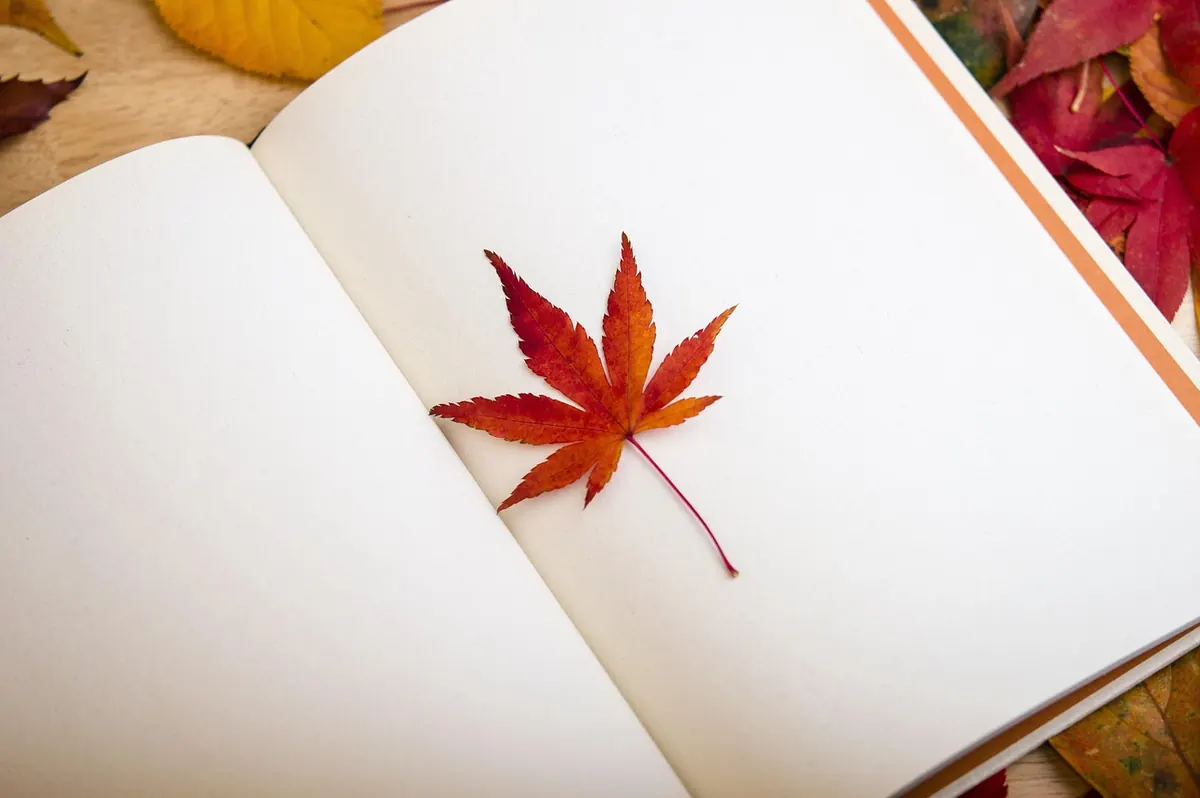
Photo: JeongGuHyeok / Pixabay
A practical guide to sketching Mediterranean woodland edges in late summer, from reading the layered structure of...
A practical guide to reading a leaf’s shape, margin, veins and attachment before you draw, with a clear step-by-step...
Twenty specific sketching prompts for the woods the day after rain — wet bark, beaded droplets, puddle mirrors,...

Sketches and inspiration from the forest.